
⚠️ Safety Notice – Reverse Cycle Air Conditioners
This equipment must only be installed, commissioned, serviced and repaired by suitably qualified and licensed personnel.
Before commencing work, complete a task-specific risk assessment and ensure electrical isolation procedures, safe access, adequate service clearances and appropriate PPE have been considered. All work must comply with applicable regulations, standards and manufacturer requirements.
Particular care must be taken when working around electrical systems, refrigerant circuits, moving parts, roof spaces, ceiling spaces, confined spaces and working-at-heights hazards where applicable.
Do not proceed if safe access, required clearances, confined space risks or appropriate safety controls cannot be achieved and maintained.
Safety takes priority over diagnosis, repairs, installation schedules and customer expectations. If the task cannot be completed safely, it must not proceed until the risks have been adequately controlled.
Pdf Owner's Manual CE52-24F(C)-B AU1906 attached for reference
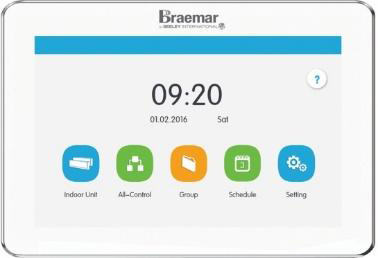 CE52-24/F9(C) - Central Controller
Overview
This article provides wiring requirements, termination rules, and common fault causes for installations where a CE52 Central Controller is connected to multiple outdoor VRF/MCHX units. Incorrect termination, wiring topology, or addressing will result in communication faults or system instability.
Power Supply Requirements
⚠️ Important
- The CE52 Central Controller requires a separate power supply.
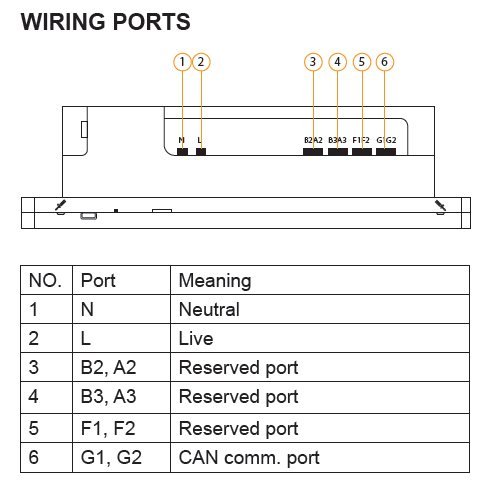
- Power must be connected to L / N / E terminals on the controller.
- The CE52 is not powered via the communication network.
Communication Wiring – Multiple Outdoor Solution
D1 / D2 Indoor Communication Network
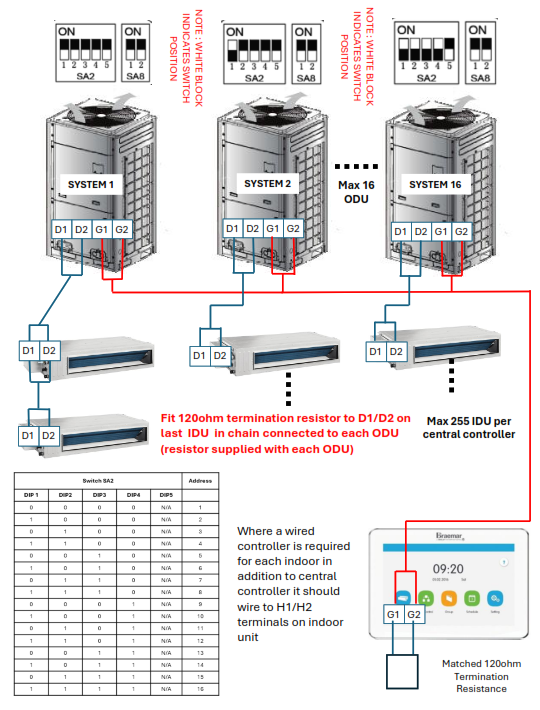
- Indoor units must be connected in series (daisy chain) on the D1/D2 communication line.
- Star wiring configurations are NOT permitted and will cause communication errors.
✅ Termination Requirement
- The final indoor unit on the D1/D2 chain must have a 120 Ω termination resistor.
- The termination resistor is supplied in the outdoor unit pack‑out kit.
G1 / G2 Central Controller Network
- The CE52 Central Controller is supplied with a 120 Ω termination resistor.
- This resistor must be fitted across the G1/G2 terminals on the Central Controller.
Do NOT fit termination resistors to the G1/G2 outdoor network
Correct Rule:
120 Ω termination is only required at the Central Controller (G1/G2), not at outdoor units.
Common Installation Errors & Communication Fault Causes
| Issue | Description |
|---|---|
| Incorrect termination location | 120 Ω termination resistor not fitted to G1/G2 on the Central Controller |
| Star wiring topology | Communication wiring installed from outdoor to each indoor unit instead of daisy‑chain |
| Outdoor addressing fault | Outdoor unit DIP switch settings not sequential on a Multiple Outdoor installation |
| Shield not earthed | Communication cable earth screen/drain wire not terminated correctly to earth |
| Incorrect resistor placement | Termination resistor fitted to outdoor units instead of the controller |
Correct Rule (Check)
One termination resistor only, fitted at the correct end of each network
- D1/D2 → Final indoor unit only
- G1/G2 → CE52 Central Controller only
- Never terminate outdoor G1/G2 terminals
Outdoor Unit Addressing (Multiple Outdoor Installations)
- All outdoor units must be addressed sequentially using the DIP switches.
- Duplicate or skipped addressing will prevent the CE52 from correctly identifying connected units.
✅ Always confirm:
- Address order
- DIP switch positions
- Match against commissioning documentation
Communication Cable Shielding
- Use screened communication cable for all D1/D2 and G1/G2 networks.
- The earth screen/drain wire must be bonded to earth correctly.
- Floating or incorrectly bonded shields may introduce noise and intermittent faults.
Key Takeaways
- CE52 requires independent power supply
- Daisy chain only – no star wiring
- 120 Ω termination required at:
- Final indoor unit (D1/D2)
- Central Controller ONLY (G1/G2)
- Outdoor units on G1/G2 must never be terminated
- Confirm outdoor DIP switch sequencing
- Earth communication cable shielding correctly
CE52 Central Controller Connections
Additional Terminal Functions
F1 / F2
- Used for Fire Trip shutdown input
- Typically connected to:
- Fire Control Panels
- Commercial / industrial fire systems
Power Supply & Wiring
Installation and wiring must be done by a qualified electrician.
Power Requirements
- Uses standard household power (240 V AC)
- Works with 50 or 60 Hz
- Only use an approved 3‑wire power cable
- Cable size: 1.5 mm²
- Must meet electrical safety standards
Connecting the Wires
- Connect the communication wires to terminals G1 and G2
- Connect the Neutral wire to the terminal marked N.
- Connect the Live wire to the terminal marked L.
- Connect the earth (ground) wire to the earth terminal on the metal box cover.
✅ Make sure all screws and terminals are tight before turning the power on.
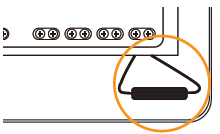
120-ohm Resister must be connected to G1, G2
Communication Cable Screen (Earth) – Critical
- Use shielded, twisted‑pair communication cable
- The cable screen (drain wire) must be:
- Earthed at ONE point only (typically at the outdoor unit)
- Do NOT earth the screen at multiple locations
⚠️ Incorrect screen earthing can cause:
- Communication dropouts
- Random indoor unit faults
- CE52 offline alarms