
Multi System Not Working Individually (Heads OK Together)
⚠️ Safety Notice – Reverse Cycle Air Conditioners
This equipment must only be installed, commissioned, serviced and repaired by suitably qualified and licensed personnel.
Before commencing work, complete a task-specific risk assessment and ensure electrical isolation procedures, safe access, adequate service clearances and appropriate PPE have been considered. All work must comply with applicable regulations, standards and manufacturer requirements.
Particular care must be taken when working around electrical systems, refrigerant circuits, moving parts, roof spaces, ceiling spaces, confined spaces and working-at-heights hazards where applicable.
Do not proceed if safe access, required clearances, confined space risks or appropriate safety controls cannot be achieved and maintained.
Safety takes priority over diagnosis, repairs, installation schedules and customer expectations. If the task cannot be completed safely, it must not proceed until the risks have been adequately controlled.
Summary
On multi-split systems, where indoor units operate correctly when multiple heads are on, but fail when run individually, the most common cause is incorrect wiring or incorrect pipe connections between indoor and outdoor units.
This guide provides safe diagnostic steps, pump-down guidance, and best practice commissioning checks.
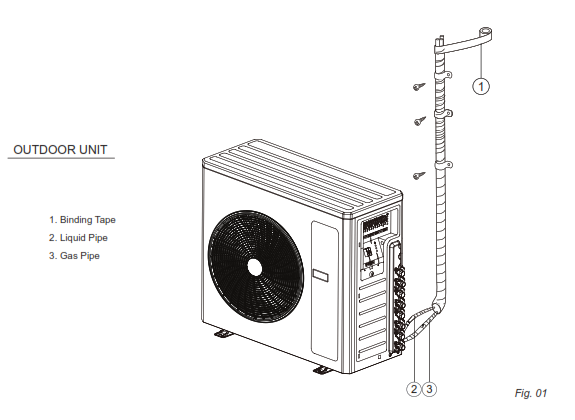
Safety & Qualification
- All refrigerant work must be carried out by a qualified, licensed HVAC technician.
- Systems use R32 refrigerant (flammable) – follow safe handling and recovery procedures.
- Use proper recovery equipment if refrigerant needs to be removed.
Typical Symptoms
- System works when 2 or more indoor units are running
- Individual indoor units:
- Do not cool/heat
- Blow incorrect air temperature
- No obvious fault codes (or inconsistent behaviour)
Most Likely Cause
In most cases:
- Interconnection wiring (indoor ↔ outdoor) is crossed
The installation manual reinforces:
- Each indoor unit must match the correct pipe connection AND electrical terminal (A-A, B-B, etc.)
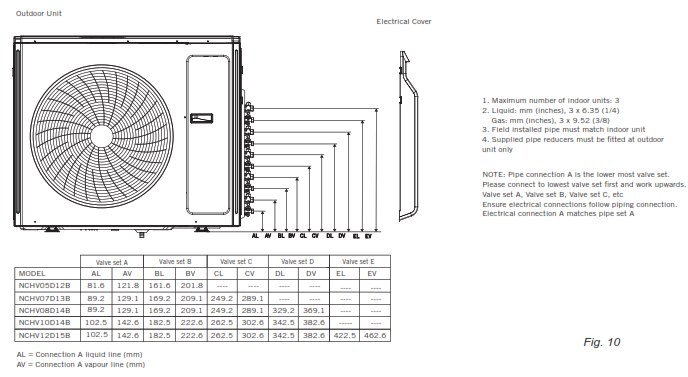
First Checks (Before Pump Down)
- Run system in Cooling Mode only
- Turn ON one indoor unit at a time
- Observe:
- Any other indoor coil becoming cold or icing → indicates cross connection
This works because:
- In Cooling mode, only the active indoors EXV opens
- Other units should remain inactive
Why Heating Mode Can Mislead
- In Heating mode:
- All EXVs open partially (~50 steps)
- Refrigerant flows through all indoor units
- This can make the system appear “OK” even when incorrectly connected
Recommended Fix Approach (Best Practice)
Step 1 – Check Wiring First (Preferred)
- Confirm:
- Terminal matching (A to A, B to B, etc.)
- No swapped communication/wiring
This is usually faster and avoids unnecessary refrigerant work.
Step 2 – Only If Required: Identify Pipework (Nitrogen Test)
If pipework is suspected:
- Isolate system
- Use nitrogen to confirm correct pipe pairing between indoor and outdoor units
Pump Down Procedure (If required)
Option 1 – System Operational
- Run system in Cooling Mode
- Turn ON the indoor unit(s) to be isolated
- Connect gauges
- Close liquid line valve
- Monitor suction pressure:
- Should drop toward 0 (vacuum)
- At ~0:
- Close suction valve
This isolates refrigerant in the outdoor unit
Leaves pipework and indoor unit clear
Option 2 – System Not Running
- Use a recovery unit
- Fully recover refrigerant into a cylinder
- Weigh and record charge
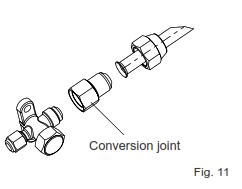
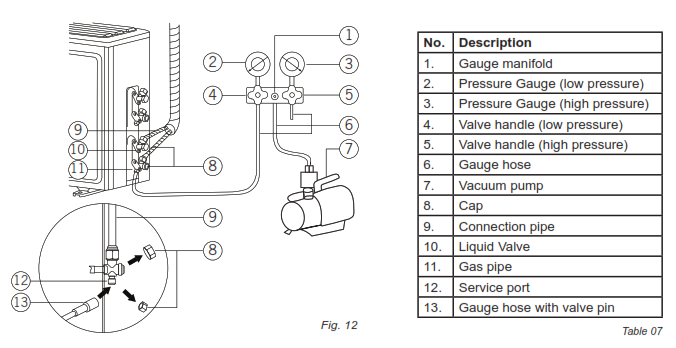
Recommissioning / Recharge
- System must be:
- Pressure tested
- Vacuumed to 500 microns and held
- Recharge:
- By measured weight
- Based on manufacturer data
Additional Checks
Before finalising:
- Are there any fault codes present?
- Is the correct refrigerant in the system?
- Has pipe connection order been followed correctly?
- Have indoor units been tested individually in cooling mode?
Key Takeaways (Technician Quick Reference)
| Issue | Most Likely Cause | Fix |
|---|---|---|
| Works with multiple heads | Wiring or pipe mismatch | Check wiring first |
| Indoor unit not cooling alone | Crossed connection | Run single head cooling test |
| Appears OK in heating | Normal EXV behaviour | Use cooling mode for testing |
| Need to isolate system | Standard pump down | Close liquid then suction valves |
Installer Note
This solution should be used alongside the official installation manual for the model installed:
Install Manual ODU - Braemar - NCHVB-02-A